
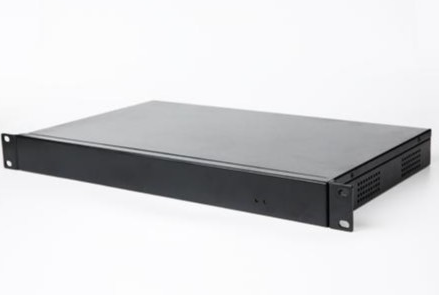
HB-DS6000 Intelligent Environmental Monitoring System

1. Power and environmental monitoring system
Deploy infrared detectors: install infrared detectors at the entrance of the distribution room for entry monitoring and intrusion prevention;
Deploy temperature and humidity transmitters: distributed to monitor ambient temperature and humidity;
Deploy water level transmitters: monitor whether water enters the cable trench;
Deploy noise sensors to monitor ambient noise;
Deploy ozone sensors to measure ozone concentration in the environment and prevent accelerated equipment oxidation;
Deploy main-transformer overtemperature sensors to monitor transformer shell temperature;
Deploy dehumidifiers for on-site dehumidification;
Deploy air-conditioner controllers for local air-conditioning control
Deploy SF6 + O2 gas detectors to monitor SF6 gas concentration and oxygen content in the distribution room, ensuring environmental safety for personnel entering the site
Each distribution room is equipped with an intelligent integrated monitoring device for the distribution environment to aggregate the status and data from each sensing device. The host has edge computing capabilities and can control on-site lighting, fans, dehumidifiers, water pumps, and other equipment.
2. Video surveillance system
Deploy a video surveillance system so personnel can inspect the high-voltage room environment and high-voltage equipment. The platform uses high-definition video monitoring devices. These devices transmit audio, video, and status information over the network, and the platform manages all video surveillance devices.
3. Intelligent access control management system
Deploy an access control management system to manage personnel entry and exit, with remote door-opening support. The system automatically identifies the identity information and access permissions on smart cards. Cardholders can enter only after swiping their card at an authorized access point during the specified time. Otherwise, unauthorized intrusion is rejected and an alarm signal is output. It can also work together with environmental and power data so that card access is allowed only after the opening conditions are met.
4. Wireless temperature monitoring system for switchgear
Deploy a wireless temperature monitoring system for switchgear to monitor the temperature of high-voltage equipment nodes and strengthen busbar temperature monitoring to prevent adjacent insulating parts from being burned by busbar overheating.
5. Online partial discharge monitoring system
Deploy an online partial discharge monitoring system to monitor spatial partial discharge and partial discharge inside switchgear. Each distribution room is equipped with one set of UHF partial discharge monitoring for spatial partial discharge, and each high-voltage cabinet is equipped with one TEV partial discharge monitoring point. This allows real-time monitoring of discharge conditions and timely detection of hidden safety risks.
UHF + earth wave partial discharge monitoring
Note: The TEV acquisition front end is magnetically attached to the rear backplane of the switchgear, so it does not affect the structure of the switchgear. Battery power supports an 8-year service life, wireless communication, and no cable laying is required.
6. Intelligent fire monitoring system
Deploy smoke detectors to monitor fire conditions in the distribution room. When a fire alarm signal is collected, the intelligent monitoring host uploads the signal to the system monitoring software and links with the video system for recording.
7. Distribution transformer environmental intelligent integrated monitoring system platform software
Deploy one set of distribution transformer environmental intelligent integrated monitoring system platform software in the local city (district) bureau monitoring center. It mainly includes a hardware platform and a software platform. The hardware platform includes servers, switches, monitors, and other devices. The server is the core of the entire system, and its basic tasks are data maintenance and data processing. The software platform mainly collects and manages all station-side systems centrally, and displays the real-time status of each station side on a graphical interface, including main wiring, equipment status, real-time detection data curves, and historical data curves, providing an intuitive description of the on-site environment.
The platform can collect and display multi-point distribution room environmental data in a centralized way
Historical data can be queried
Remote control of power equipment in each distribution room is supported
There is a custom report platform that makes it easy for users to build the report data they need
The platform has configuration system capabilities and can integrate equipment from other manufacturers at will
The system can be viewed remotely through a browser, which is convenient for users
The distribution transformer intelligent environmental integrated monitoring system is mainly divided into three parts: the perception layer, network layer, and application layer.
1) The perception layer includes various sensing devices (environmental sensing, equipment sensing, image sensing) and aggregation units (distribution transformer intelligent environmental integrated monitoring devices). It is installed in each switching station, distribution room, and ring main unit to monitor the actual on-site environmental status and parameters in real time, such as open flame, smoke, unauthorized intrusion, animal intrusion, cable trench water ingress, ambient temperature and humidity, access control management, air-conditioning control, SF6 concentration, O2 content, dehumidifier control, cable joint temperature inside switchgear, and partial discharge monitoring inside switchgear.
2) The network layer is mainly composed of access gateways. Data sensed by the power IoT can be uploaded through APN/4G private networks or optical fiber networks, and can also be uploaded through the communication interfaces of DTU/FTU/TTU via the power automation network. The network layer is responsible for data transmission between terminal devices and the IoT platform, including collected data, response signals, and network heartbeat information sent upstream by terminal devices, as well as control commands, broadcast information, and response information sent downstream by the IoT platform.
3) The application layer consists of various system master stations, data services, and application services. It is mainly used to receive monitoring data uploaded by sensors from access gateways, then perform extraction, analysis, and display processing, jointly forming a complete integrated information platform for a smart power IoT application system.
Contact Us