
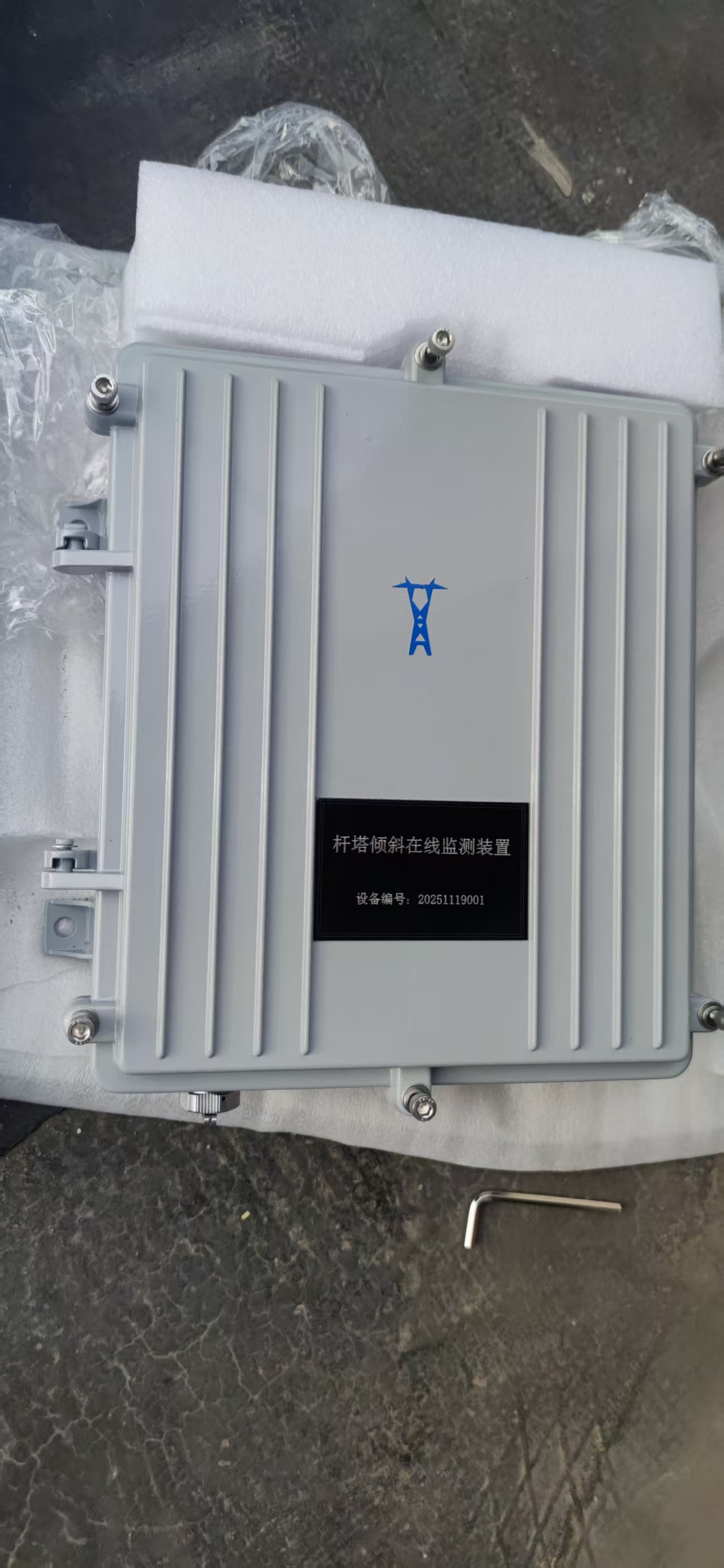
HB-QX10 Tower Tilt Monitoring Device

1. Supports data query, alarm reception, and parameter setting via mobile phone SMS
2. Equipped with low-power liquid crystal display and control buttons, enabling local display of monitoring data and configuration parameters
3. Uses solar power plus lithium battery power supply system, lightweight, and convenient for installation and maintenance
4. Flexible communication methods, supporting ZIGBEE/WIFI/GSM/CDMA/GPRS/4G networks
5. Industrial-grade product, with waterproof metal casing, suitable for various harsh climate environments
6. The system adopts low-power design, using dynamic power management strategies to meet energy-saving requirements
7. Supports controlled collection and active collection modes, and sampling intervals (1 minute~24 hours) can be set through background software
8. Comes with a complete background software, featuring data storage, historical data query, report generation, printing functions, and the ability to analyze the trend of tower status
9. Uses the latest imported low-power dual-axis MEMS sensors, with high measurement accuracy
10. Built-in real-time clock and large-capacity memory, capable of locally storing collected data and marking timestamps for collected data
The high-voltage transmission line tower tilt online monitoring system independently developed by Henan Hongbo utilizes the latest MEMS sensor technology and wireless communication technology to monitor the tilt angle of poles in areas prone to ice disasters, snow disasters, landslides, mountain body slides, coal mine subsidence zones, and other adverse geological regions. The system performs real-time monitoring of bidirectional tilt angles (parallel and perpendicular to the line direction). When the tilt angle exceeds the set threshold, the system can promptly send pre-warning or warning information via GSM/CDMA/GPRS/4G networks to the monitoring center, alerting line operation supervisors to pay attention to the line's operational status and take appropriate measures.
This system uses a solar panel plus battery power supply method, making installation convenient. After commissioning, it enables operation departments to promptly understand the working condition of the towers, effectively preventing accidents caused by tower tilting.
This equipment can also be applied to the tilt monitoring of objects such as cranes, billboards, bridges, dams, and buildings.
Specifications
- Inclination measurement range
- Dual-axis -10°~+10° (optional -30°~+30°, -60°~+60° or -90°~+90°)
- Inclination measurement error
- ≤±0.05°
- Inclination measurement resolution
- ±0.01°
- Temperature
- -40℃~+85℃
- Relative humidity
- ≤100%
- Atmospheric pressure
- 550hPa~1060hPa
- Protection rating
- IP65
- Working power consumption
- ≤1W; Standby power consumption ≤0.1W
- Power supply method
- Solar power + battery power take, input voltage +12~24V
- Battery service life
- ≥3 years, can continuously power for more than 30 days without external charging
- Weight
- ≈3Kg (excluding installation hardware)
- Applicable objects
- 10KV~1000KV high-voltage transmission lines
Contact Us