
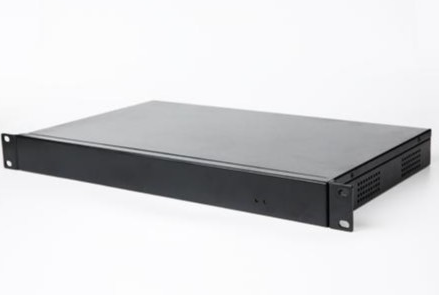
HB-SC6000 Switchgear Online Monitoring System

Partial Discharge Monitoring Function:
(1) The partial discharge detection device includes partial discharge sensors and data processing terminals. The partial discharge sensors include ultrasonic (AE) and transient earth voltage (TEV) sensors. The partial discharge online device installed outside the cabinet can accurately reflect the partial discharge situation inside the ring main unit.
(2) The data processing terminal of the partial discharge monitoring device should be equipped with communication interfaces such as RS485, Ethernet, and USB. The data processing terminal should meet the communication and interface protocol requirements between the intelligent gateways in the distribution room.
(3) The failure of the partial discharge monitoring device shall not affect the original insulation performance and normal operation of the switchgear.
(4) The partial discharge device should be able to sample the partial discharge signals at each measurement point. Each sampling length should be greater than 50 power frequency cycles. The shortest monitoring cycle should not be greater than 1 hour, and the monitoring cycle should be adjustable.
(5) The partial discharge device should be able to analyze the characteristics of partial discharge, including at least the following basic parameters: maximum discharge quantity, discharge phase, and discharge count.
(6) The partial discharge monitoring device should have alarm threshold setting and alarm indication functions.
(7) The partial discharge monitoring device should have self-check, data storage, and test information management functions.
(8) The partial discharge monitoring device should have diagnostic analysis functions and partial discharge source localization functions.
Environmental Monitoring Function
(1) Real-time display of environmental information and operating parameters of the monitored equipment at the monitored site, including environmental temperature and humidity, smoke, water immersion, water level, door magnet, etc.
(2) Ability to remotely turn on/off the monitored equipment at the monitoring site and remotely adjust the configuration parameters of the monitoring equipment online.
(3) Sound and light alerts for alarms according to the rules for alarm confirmation, shielding, and printing; automatic handling of alarms.
(4) Alarm conditions, alarm levels, and whether alarms are shielded can be set and modified by the system administrator online according to the site conditions.
(5) According to the type of alarm, level, time, location, and shielding factors, the system can automatically notify relevant personnel according to predefined rules. Notification methods may include on-site sound and light alarms, WeChat official account push notifications, etc.
(6) Statistics and queries of historical data, alarm records, operation records, etc., and print reports.
(7) The system has complete and convenient maintenance, query, and statistical functions.
(8) Automatically complete data saving and recovery when network anomalies occur.
(9) The system can support the handling process of equipment fault alarms and provide standardized procedures for various types of equipment fault handling.
This system is an online monitoring system, running on a Linux platform, which includes real-time data display on the homepage, system management (including MQTT), user management, temperature sensor management, and historical data management. All management operations are performed through a visual interface.
Specifications
Ultrasonic Sensor
- Measurement Range
- 0-60dBmV
- Frequency Band
- 20kHz~60kHz
- Sensitivity
- Peak sensitivity shall not be less than 60dB (V/(m/s)), average sensitivity shall not be less than 40dB (V/(m/s))
- Linearity Error
- No more than ±20%
- Stability
- After the device has been continuously working for 1 hour, the change in its response value when a constant amplitude pulse signal is injected shall not exceed ±20%
- Communication Method
- RS485/LoRa
- Power Supply Method
- DC12V/Battery
Transient Ground Sensor
- Measurement Range
- Measurement Range 0dBmV~60dBmV
- Frequency Band
- 3MHz~100MHz
- Linearity error
- Not greater than ±20%
- Pulse count
- Pulse count error not greater than ±10%
- Stability
- After the device has been continuously working for 1 hour, when a constant amplitude pulse signal is injected, the change in its response value should not exceed ±20%
Temperature and humidity sensor
- Measurement range
- Temperature: -20℃~+100℃; Humidity: 0%~99%RH
- Measurement accuracy
- Temperature: 0.5℃; Humidity: ±1%RH (25℃)
- Response time
- ≤15s
- Data transmission distance
- ≥2m
- Output method
- RS485
Smoke sensor
- Power supply
- DC12V~24V
- Alarm Method
- Normally Open/Normally Closed Optional
- Temperature Compensation
- Automatic
- Output Method
- RS485
Door Magnetic Sensor
- Power Supply
- Built-in Battery
- Alarm Method
- When the distance between the main unit and the magnetic strip is >1.5cm, an alarm alert is immediately issued
- Output Method
- RS485
Water Immersion Sensor
- Power Supply
- DC12V~36V
- False Alarm Rate
- <100ppm
- Response Time
- <10s
- Output Method
- RS485
Water Level Sensor
- Power Supply
- DC12V~36V
- Measurement Range
- 5m
- Water Level Measurement Accuracy
- 1cm
- Response Time
- <1s
- Output Method
- RS485
Collector
- Output Interface
- RJ45、4G
- Input Power Supply
- AC220
Other Parameters
- Monitoring Host (Including Dedicated Software)
- Real-time display of monitoring data, supporting query, analysis, warning and comprehensive presentation of various monitoring data
- Overall protection rating
- Not lower than IP54
- Operating temperature
- -25ºC ~+55 ºC
Contact Us

Hotline
400-6371-066

Technical Support
0371-56977878

Sales
0371-56977890 0371-56977880

WeChat Service Account

Douyin

Video Account